Wonderful episode about the ways trees and fungus cooperate in the forest.
Revealing the Green Man, by Mark Olly – a review
 Ubiquitous British folk symbol found to have deep historical roots that presage the later sacrificial and redemptive aspects of Christianity! Wow! Who knew? Not me!
Mark Olly´s new book, Revealing the Green Man, tells this story and builds his argument plank by plank, surveying ancient religions around the world to find that far from being a Brythonic decorative figure, the Green Man existed throughout pre-Bronze Age civilizations world-wide as a dark figure of sacrifice and resurrection.
¨Depictions span the full reach of time and geography. The impulse to depict this essential life force can be found way back in the mists of prehistory, from Middle Eastern and Far Eastern cultures before 4000 BC, in jungles and forests, mountains and rivers, and even deserts and wildernesses, where the desire to see the life force return was most likely the strongest of all.¨
As an American I have no context for the Green Man other than the most apparent being within nature. I have seen the heads of Green Men peering out beneath their leafy foliage in carvings on church pews in tiny British country parishes, and I have seen larger statues of the Green Man in British public spaces, but without context I found these images to be mere curiosities.
Olly situates the emergence of the Green Man to the discovery of copper, which was first smelted in 6000 BC in the Caucasus and only appeared in Britain 4000 years later when it was first mined in Wales. That there was a shamanic cultus during that time is not in doubt and Olly traces the Green Man idea from the discovery of this magical metal throughout the geographic range and artistic expression of copper mining and fabrication, specifically tieing it to shamanic rituals for the health of the land and for nature´s rebirth after the death of winter.
Olly looks to the distant past for hints as to the meaning and emergence of the Green Man. Beginning with an analysis of a passage from the Babylonian Epic of Gilgamesh that correlates to aspects of later Celtic sacrifice (beheadings and triple sacrifice), Olly next looks at the archeological discovery of Otzi, the remains of the last prehistoric hunter found in 1991 buried in ice in the Italian Tyrol, along with his kit which included a copper axe. Why would this hunter carry a copper axe when stone axes were available and more durable? Perhaps the copper axe was not used for the usual purposes but rather carried for ritual purposes related to the hunt.
In exploring the metaphorical capacity of the element of copper, Olly develops his hypothesis about its probable shamanic and ritual uses. Rather than spoil the pleasure of the reader discovering these, I will only say that all of the remainder of the book and explanation of the Green Man cult ties back to the understanding of the nature and interrelationship of copper, the gold of the sun, and the green of nature. It should also be noted that these various elements relate to the emergence of the Neolithic age when the relationship between society and the land was changing focus from hunter gatherers to farmers; a time when the land was seen as more and more sacred and worthy of worship and honor.
Once this hypothesis is laid out, Olly weaves together various disparate threads found in different cultures and in different time periods, including the Foresters Guild, the times of the Knights Templar and Hospitaller, and the tale of Sir Gawain and the Green Knight to bring the Green Man up to 16th century Britain.
Sixteenth century Britain is marked as the point after which the Green Man story fades. Copper became just another tool as copper plates were used in the printing process. The appetite for knowledge and certainty grew rapidly as scientific discovery built upon discovery. Shamanic practice was out of favor in this new age of truth and the Green Man, stripped of his shamanic valence and controlled by the religious forces and wars of the time, slipped from view. That this period was followed by the industrial age in which all things were broken down into component parts and turned all consideration of objects into machines, speaks to the loss of soul represented in part by the Green Man legend. The Green Man itself became a tie to the folk traditions of the past absent its sacred function.
However, with the Victorian interest in the romantic revitalization of the druids and a resulting increase in curiosity about the uses of ritual, the Green Man has come back into his own. The Green Man, a potent symbol of standing with Nature against the forces of technology that would despoil her, has breathed new life into our understanding of what he might offer us today.
I quite enjoyed this book and found that it was well written and, in spite of covering quite a bit of information, easy to follow. I particularly liked the fact that the narrative circled back around itself so that where it started it also ended. There is more for me to ponder and that is always a sign for me of a good read, when I am left wanting to know more.
MountainsKeeping Things in Perspective
by Madisyn Taylor
Published 7/11/2016 on DailyOm.com
From the top of a mountain, we are able to witness life from a different perspective bringing us a new awareness.
Mountains have always captured our imaginations, calling us to scale their heights, to circle and worship at their feet, and to pay homage to their greatness. Mountains can be seen from thousands of miles away, and if we are lucky enough to be on top of one, we can see great stretches of the surrounding earth. As a result, mountains symbolize vision, the ability to rise above the adjacent lowlands and see beyond our immediate vicinity. From the top of the mountain, we are able to witness life from a new perspective—cities and towns that seem so large when we are in them look tiny. We can take the whole thing in with a single glance, regaining our composure and our sense of proportion as we realize how much bigger this world is than we sometimes remember it to be.
Mountains are almost always considered holy and spiritual places, and the energy at the top of a mountain is undeniably unique. When we are on top of a mountain, it is as if we have ascended to an alternate realm, one in which the air is purer and the energy lighter. Many a human being has climbed to the top of a mountain in order to connect with a higher source of understanding, and many have come back down feeling stronger and wiser. Whenever we are feeling trapped or limited in our vision, a trip to our nearest mountain may be just the cure we need.
There’s a reason that mountain views are so highly prized in this world, and it is because, even from a distance, mountains remind us of how small we are, which often comes as a wonderful relief. In addition, they illustrate our ability to connect with higher energy. As they rise up from the earth, sometimes disappearing in the clouds that gather around them, they are a visual symbol of earth reaching up into the heavens. Whether we have a mountain view out of our window or just a photograph of a mountain where we see it every day, we can rely on these earthly giants to provide inspiration, vision, and a daily reminder of our humble place in the grand scheme of life.
Pagan Portals – the Cailleach
The Cailleach by Rachel Patterson, Moon Books Publisher
For such a little book Rachel Patterson´s new Pagan Portals offering ¨The Cailleach¨ provides a satisfying blend of scholarship, folklore, humor, and personal experience. As a newish member of the pagan community I am hungry for information about the gods and goddesses of my ancestors. The Cailleach, with her attributes of winter and rocks and transformation, so infuses the wintry world I have always called home that I was drawn to learning more of her.
I found that I thoroughly enjoyed the tone and the structure of this book as it laid out the information in a format that is similar to ways in which I prefer to learn and share learning. I found the information, for an introductory book, to be enough but not too much. Others may be looking for more information on the Craft, or on pathworking than is presented here but this provides an excellent introduction before delving into meatier fare.
Patterson researches the folklore of Britain to find the Cailleach and follows her tendrils through story even to the Iberian peninsula, Scandinavia, and Romania among other places. She highlights the similarities of the goddesses described in these tales and pulls the themes together to provide a fully formed image, frequently humorous, that enabled me to approach what I had feared was to be a frightening goddess. I came away actually wanting to know more of her and to discover the places where she has left her footprints in my life.
The folk tales provide the grounding for the rest of the book. What follows them is a very straightforward and practical disquisition on the symbols and correspondences that refer to and call on the Cailleach, ways to connect with and honor her, and most of interest to me, the lessons that can be learned from her if you choose to follow.
I found those lessons to be powerful for my own personal development: the cycle of life, the release of fear, transformation, hidden things, the importance of ancestral knowledge, guidance, and forgiveness. Patterson warns though that the Cailleach has a deserved reputation for kicking butt and that to enter into a relationship with her means that you will be held to an accounting; no lolly gagging on the spiritual superhighway because she will make you move and do the work. She is not above scaring you into desired behaviors as it is said that she frightens wild animals into hibernating so that they will survive the winter.
She seems a very complex goddess but one worth knowing.

An Appreciation of Druidry: Thoughts on a blog post
Picture Courtesy of druidlife.wordpress.com
This lovely blogpost by Talis Kimberly published on Druid Life (link below) elicited many thoughts for me to share. I came to Druidry very late in my life, after a circu-ambulatory lifetime of exploration and experience within the Christianity that predominates in the United States. Starting at a point of extreme left-brained and law-focused evangelicalism, I slowly wound my way through increasingly liturgical expressions until what spoke most to me was metaphor and symbol.
As I have faced death due to my cancer, I have been drawn to understand the ¨Other Side.¨ Familiarity with the Christian mystics embraced by the highly liturgical factions within Christianity led me to explore their writings; surely they had experience with the Other Side which had set up a longing within each of their hearts to remain in the presence of the Holy. Working with Evelyn Underhill´s Practical Mysticism, I began to develop that underdeveloped portion of my own soul.
Developing this led me to appreciate other expressions of mysticism and to find, to my surprise, that at heart, no matter their starting positons, all mystics beleve the same things – we are all connected, we are loved extravagantly, we are all accepted including the parts we ourselves find embarrassing and problematic, and that the Holy is enigmatic even when in the midst of us.
I came to adopt this earth-based religion/philosophy as I had experience of being stalked through my life by the deer-goddess Elen, a very ancient Celtic goddess who I had no reason to have ever come in contact with, and yet who had been present in my life for as long as I can remember. Coming to Druidry alone, in the middle of nowhere northwestern Montana, has been beneficial – I have no one to share with, no one to influence my experience, no grove to conform to.
I have been forced to take responsibility for my beliefs, my knowledge, and my action in a distinct way. I have searched out those who have written about their beliefs and been blessed to have discovered some mighty souls. To my surprise, my path has led to my coming to know some of these very people, though thousands of miles may separate us. I have come to discover shared experiences as the Goddess called to each of us and shared healings of identical wounds.
What can be overwhelming is that to be a true follower of druidry requires acquiring information on a wide variety of topics so as to inform action, living intentionally in all areas of ones life, understanding that there is a cost to be paid when we run afoul of the common culture and yet living out of core beliefs and precepts anyway, and doing this 24/7 while also celebrating the wheel of the year and applying the seasonal insights to a deepending practice and awareness of the sacred.
My first real intentional decision involved choosing woods for a bespoke cane that I was having made; the woods had to be from sustainable sources and I felt like the decision took forever by the time I had done my research. I think a topic for another day is the need for us to be gentle with ourselves as well. Since part of our experience is that we are human, there are limits and we fail or at least fall short. Decisions often have unintended consequences. We must love and accept what the full experience of being human entails.
I am fortunate to no longer live in a large metropolitan area. I find that being in touch with the land is so difficult in an area where one is separated from agriculture and surrounded by buildings and asphalt that are paeans to man´s superiority. Those who manage to do this have my greatest respect. Brendan Howlin´s book, The Handbook of Urban Druidry: Modern Druidry for All, was a wonderful find in providing support for those who face this situation.
My need to be in a smaller settlement and close to the mountains was honored after retirement. I did not feel I had the ability, or really what amounted to the courage, to make the change earlier. Being in an area where every day I can watch the cycle of planting, growth, and harvest, being in an area where I know my farmers and their challenges with the land, these have brought a richness to my spiritual practice. I am slowly aligning more and more with the native American understanding of medicine. Medicine is not what you take when you are ill, but what infuses and aligns your entire life.
Perhaps Talis says it better:
A guest blog from Talis Kimberley I was fortunate enough t o spend my childhood in a house with a large garden. I have often said that the garden, not the house, are really where I lived; certainly my memories of it are stronger. Until I was 17 I knew a kindly green landscape where […]
via The land: always the land… — Druid Life
John Muir and Two Medicine
Last night my husband and I watched the PBS rebroadcast of Ken Burns´ wonderful series on the National Parks. We are very invested in the idea of the parks and very aware of some interests in this country that only value them in terms of extractable commodities. Frequently we hear of oil interests wanting to drill or, worse yet, frack in or near the parks and threaten the water supply. The Two Medicine area of Glacier/Waterton National Parks is one place that, thank the goddess, has finally been spared.
This image is from the National Parks Service website and shows Two Medicine Lake and Mt. Sinopah: https://www.nps.gov/glac/planyourvisit/twomedicine.htm
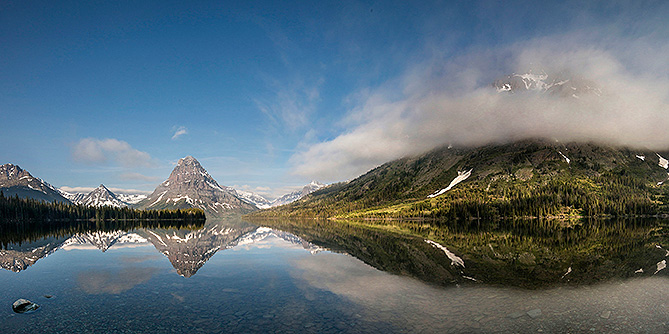
Recently, mostly with the active involvement of our wonderful senator Jon Tester, the U.S. government canceled the oil and gas leases in the Badger/Two Medicine. This land is holy land. The Blackfeet call Two Medicine the place where Wind was born. I can attest to the likelihood of that as the wind is a major feature! But Two Medicine is holy as well to anyone who is sensitive and attuned to beckoning Spirit. The first time I went to Two Medicine, after I had passed the turn off to Trick Falls, turned the corner to face the lake, and saw the mountains rising up ahead of me like guardian spirits of place I burst into tears. I was so overwhelmed with the power of the place that there was nothing for it but to cry in its presence. Two Medicine Webcam.
Frequently Ken Burns uses quotes from John Muir in his National Parks documentary and one really caught my ear and framed my experience. I could not find it exactly when I scanned John Muir´s writings on the Sierra Club website. But, I offer the following from the first chapter of Muir´s book Our National Parks:
The tendency nowadays to wander in wildernesses is delightful to see. Thousands of tired, nerve-shaken, over-civilized people are beginning to find out that going to the mountains is going home; that wildness is a necessity; and that mountain parks and reservations are useful not only as fountains of timber and irrigating rivers, but as fountains of life. Awakening from the stupefying effects of the vice of over-industry and the deadly apathy of luxury, they are trying as best they can to mix and enrich their own little ongoings with those of Nature, and to get rid of rust and disease. Briskly venturing and roaming, some are washing off sins and cobweb cares of the devil’s spinning in all-day storms on mountains; sauntering in rosiny pinewoods or in gentian meadows, brushing through chaparral, bending down and parting sweet, flowery sprays; tracing rivers to their sources, getting in touch with the nerves of Mother Earth; jumping from rock to rock, feeling the life of them, learning the songs of them, panting in whole-souled exercise, and rejoicing in deep, long-drawn breaths of pure wildness. This is fine and natural and full of promise. So also is the growing interest in the care and preservation of forests and wild places in general, and in the half wild parks and gardens of towns. Even the scenery habit in its most artificial forms, mixed with spectacles, silliness, and kodaks; its devotees arrayed more gorgeously than scarlet tanagers, frightening the wild game with red umbrellas,–even this is encouraging, and may well be regarded as a hopeful sign of the times.
http://vault.sierraclub.org/john_muir_exhibit/writings/our_national_parks/chapter_1.aspx
Get thee to the mountains, for you will surely be coming home!
Imbolc, Cancer, and Hope
Imbolc is my most favorite of the pagan holidays. It comes after the winter solstice and before the spring equinox and assures us that the sun has indeed come back, which is a very good thing, a cause for celebration as warmth and light suffuse and drive away the icy cold of the winter.
From the times of my earliest pagan ancestors, Imbolc represented much more. In those days the ability of people to survive the winter was completely due to the steps taken earlier in the year to store adequate foods, herbs, and medicines to anticipate any needs that might arise. There was no country store, there were no state-run utilities, there was no urgent care. You put up the supplies that you needed and hoped that you had not miscalculated.
By the time Imbolc rolled around those stores would have been depleted. Would there be enough food to sustain people until the weather warmed and the crops began to develop and provide? The days were longer but there were still weeks of cold weather ahead and the danger was not over yet.
The gift of Imbolc is that the sheep and cattle began to give milk again. Cheese could be made and that cheese could suffice as a protein source bridging the winter into the spring. What a life saver; because of the possibility of cheese and milk people had a chance of adequate nutrition and the promise of being able to live into the next year. This was never promised, never a sure thing, but what hope it must have brought in the icy blues and grays of a midwinter landscape. So one makes the cheese with the milk that had been given and then one eats that cheese in hopes of surviving until life became a bit easier.
The timing of Imbolc and my life circumstance makes for good reflection. I am in the winter of my life. I have advanced cancer and have run out of treatments to try and keep it at bay. Will Imbolic bridge this time until a time when more treatments may be available? Whatever it is I am all in – I will eat all the metaphorical cheese I can find if the spirits provide.
The strange thing is that this is happening for me right now. My last scan showed that my cancer was growing once again. While I thought that meant that I would be handed over to hospice forthwith, I was not! Imbolc announced itself through my oncologist opting to continue my treatment on existing medication knowing that the cancer would continue to grow but at a slow pace. Through my personal Imbolc I will ride that medicine through the growth of my cancer until it is so threatening that changes must be made. Then I will transition to the only remaining available treatment in hopes that this too will buy time until another treatment becomes available through the FDA. If it does not then it is on to hospice. If it does become available then Imbolc will have indeed bridged the two seasons for me.
The blessing and grace of Imbolc have given me the hope that even in my diminished state I am providing healing and service to the goddess, yet I am also aware that there is an element of gift in this as well. For this I am grateful.
The Welcoming Wild:Community for Introverts and Animists
One of the things that I love about blogging is that the more I get into this the more I meet people who are moving along on similar journeys, and the connections that we make are nurturing, challenging, and most of all fun. I found myself in this situation this week when my inbox received the regular blog post from Alison Leigh Lilly of The Holy Wild. Her post is so in sync with my own thoughts that I simply had to get her permission to share this with you. If you enjoy it, you can find Alison´s blog on alisonleighlilly.com so check it out. Meanwhile, here are Alison Leigh Lilly´s words on the Welcoming Wild:

Holland Lake, MT
An animist is never alone, not really.
For us, the world is full to bursting with persons of all kinds, it’s just that not all of them are human. Graham Harvey puts it succinctly in his ground-breaking book on animism:
Persons are those with whom other persons interact with varying degrees of reciprocity. […] Persons are volitional, relational, cultural and social beings. They demonstrate intentionality and agency with varying degrees of autonomy and freedom.
Someone becomes an animist, Harvey says, by learning how to recognize and engage meaningfully with non-human persons. It is a worldview that holds open the question of personhood, extending it as a possibility to all manner of beings and entities that Western culture usually dismisses as mere objects. This is not to say that animists believe all things are persons. Only that we approach the world with a certain degree of sacred curiosity, extending an invitation of respectful relationship and doing our best to remain open, listening for a response where we might least expect it. When we stop treating the world as if it were mostly composed of dead matter and mindless meat-machines, we discover that it is not as indifferent and impersonal as we’d once assumed.
The Introverted Animist
But if the world is so full of people, then where does that leave me, your friendly neighborhood introvert? (Note: When I say friendly I mean, of course, in theory. And when I say neighborhood, I mean that you probably didn’t notice that I live right next door to you. That was me, hiding behind the curtain pretending not to be home when you rang the doorbell.) As an introvert, there are days when the more I hang out with people, the lonelier I feel. I may find myself in desperate need of solitude, especially the blissful solitude of time spent outdoors in nature. Sometimes, I just need a break from humans.
The strange thing is, I’ve never felt this way about the more-than-human community. I never grow tired of listening to the wind in the cedars, or watching the way sunlight falls on the ruffled feathers of a preening crow. And so I wonder, why is it that the company of non-humans never grows wearisome? What is it that the natural world offers that I cannot get from my fellow human beings?
The answer practically leaps to my lips: the complete and utter acceptance of who I really am.
Maybe this sounds sentimental or overly romantic. On the contrary, it’s downright Darwinist. In a survival-of-the-fittest kind of world, plants and animals (including human animals) must attend to the world as it really is. Moment to moment, they must assess what’s really going on, and they have to be right (at least most of the time) in order to survive. How fast can that bear really run if I turn tail and flee? Just how injured is that limping elk, if my pack and I try to take it down? Is this plant really poisonous, or does it just look similar to one that is? In the natural world, understanding the abilities and intentions of others is a matter of life and death. In the wild, everyone is watching you.
Living in a complex more-than-human community also requires unflinching introspection and self-knowledge. Spend any time in the holy wild, and you’ll be faced with some of the most basic questions:Just how fast can I run, and for how long? Just how hungry am I? How long before my energy gives out? How cold and wet can I get before I need to take shelter? And these naturally lead to the more existential, but just as essential: What exactly are my abilities, and to what extent can I improve and expand them? What are my own intentions and desires? Just how badly do I want them? What am I willing to risk?
There is a dance here, between profound self-awareness and the sense of being keenly observed, sought out and known by the surrounding world. It is a dance that many religious seekers have felt when they’ve gone in search of solitude in the wilderness. In his book on apophatic desert and mountain spirituality, The Solace of Fierce Landscapes: Exploring Desert and Mountain Spirituality, Belden C. Lane acknowledges this feeling of attending and being attended to even as he insists on the mindless indifference of a landscape defined by its harshness, emptiness and silence. Over and over, he recounts how startled he is by the deep and abiding sense of being loved that he discovers in such places. “Why am I drawn to desert and mountain fierceness?” he asks.
What impels me to its unmitigated honesty, its dreadful capacity to strip bare, its long, compelling silence? It’s the frail hope that in finding myself brought to the edge — to the macabre, stone-silent edge of death itself — I may hear a word whispered in its loneliness. The word is “love,” spoken pointedly and undeniably to me.
This love is a longing that arises naturally between ourselves and the world of which we are both a part and apart. It is the love of attention — a word that not only speaks of willing presence (as in, attending the party) and loving service (as in, attending to her wounds) but also evokes a feeling of tension itself, the act of leaning in close, stretching ourselves towards that which draws us.
In the Western worldview, this tension is deliberately heightened into paradox by the theological assumption of an intimate but indifferent earth, and a distant yet loving God. The more we deny the living, relational personhood of the landscape and its many denizens, the more we feel broken by our limitations and self-imposed loneliness. The more we insist on God as a power of perfect might and majesty, the stranger it seems to us that he could possibly care about our flawed and fleeting mortal selves… and the more we feel inexplicably, undeservedly redeemed when we are forced, in our extremity, to acknowledge that yet somehow we still feel loved, we still feel accepted just as we are.
For the animist, though, there is no paradox. Of course the earth and its beings attend to our presence. Of course they seek to know us in our true selves, to understand our abilities and push us to our limits, to tease apart our intentions and test our commitment to what we desire. The self-awareness of our own values and limitations, and the attentive presence we feel from the more-than-human world around us no longer seem strange or contradictory. They arise from one and the same need. When such an understanding ceases to be a paradox, we no longer require harsh or difficult landscapes to break us free of our stubborn denial. We no longer need to come face to face with death in order to discover the living faces of the community of which we are already members. The living world suddenly becomes available to us everywhere, even in the most ordinary places.
Love and Lies in the Natural World
There is a simplicity in this kind of wild welcome, a refreshing freedom from both melodrama and sentimentality. It is enough to be simply and completely yourself, and in coming to know yourself better, it becomes easier to rest in that simplicity. In nature, you’ll rarely find someone trying to talk you out of self-knowledge, or pressuring you to be something other than who and what you are. When you go for a walk in the woods, the trees aren’t trying to sell you on their sincerity or convince you that nobody thinks you’re cool unless you buy the latest iPhone.
This is not to say that everything in nature is exactly as it seems. There is trickery. The perfectly harmless Viceroy butterfly mimics the brilliant colors of the much more poisonous Monarch, in hopes that you’ll decide not to risk eating him. Despite being almost entirely defenseless, a mother possum hisses and screeches, baring her teeth and rearing up on her haunches to convince you she’s bigger and tougher than she is so that you’ll back down from a fight. The tiny winter wren is so well-camouflaged, you might almost step on him before he bolts from the underbrush in a flurry of wings. The jay imitates the cry of a hawk in order to scare everyone else away from the bird-feeder in your backyard, so that she can have the score of delicious seeds all to herself.
Yes, there is trickery here. But it is a clean kind of trickery, with transparent motives. There’s also a certain playfulness to it, as if we are children playing dress up, donning costumes. These are disguises that communicate just as effectively even when we realize they are only masks. Once you get the trick, it becomes a matter of playing along. Because you’ve seen through the disguise, you better know the boundaries of the game — when to back off, when to rely on the strength of your real abilities, how to communicate your honest intentions. If you know that a hissing possum is just posturing, you can let go of unnecessary fear and adopt the correct ritual postures to avoid a confrontation. If you know the jay is bluffing, you can ignore her cries. By reading the signs, by knowing the rules and playing by them, you can navigate conflict more safely. You can play with the tension of mutual more-than-human communication, engaged more fully in the dance of give and take.
There is also seduction in the wild. I like to say, somewhat salaciously, that plants are the sluts of the natural world. Just consider the tantalizing colors and textures of fruits, the delicate scents and soft brilliancy of flowers, all to the purpose of seducing our senses and inviting us into intimate communion. But this seduction is also a mutual dance of give and take, of reciprocity and response between species. A plant cannot bully a bee into finding its pollen attractive. It must actually become what the bee desires, even as the bee itself is adapting and evolving from one generation to the next, becoming the kind of creature that can better serve the plant’s own desire to pollinate and procreate. In this and so many ways, the natural world is the most attentive lover, the most responsive beloved.
This dance of mutual change and adaptation is self-giving and simple in a profound way. Does the plant wallow in existential crisis, clinging to a particular idea of itself and worrying that by becoming what the bee desires it is betraying that idea? Is the bee wracked with guilt because of the plant’s generosity, wondering how it could ever repay the bounty of pollen it has gathered from among those petals? In the wild, seduction as well as trickery embraces a kind of unselfconscious playfulness. The melodic and acrobatic mating displays of birds have a beautiful uselessness to them, a beauty that isn’t just appreciated by potential mates of its species but gives itself simply and completely to the entire world. Have you ever wondered why you find birdsong beautiful, even though it isn’t meant for you?
Perhaps this, too, is why the natural world is so restful: so much of it isn’t about you. This is not to say that the natural world is deaf or indifferent to your presence (just the opposite!), only that the world does not revolve solely around you and your concerns. Indeed, far from indifference, this is the very definition of authentic relationship, in which the perspectives and experiences of the other are considered alongside your own. For an introvert, it is a blessing not to have to be the center of focus, always on display. To have the option to simply be present to the moment, sitting quietly in attentive observation. In fact, sitting quietly can open up whole new ways of relating to the world. The longer you sit still with a relaxed gaze, the more the innumerous beings around you start to relax as well and accept your presence as non-threatening. Here is one who is not on the prowl, who is not looking to do me harm, who is not crashing about insensitive to the damage or hurt they might be causing… Sit still outside long enough, and you’ll be able to feel the shift around you, the turn the world takes towards cautious trust, even curiosity.
It is this sacred curiosity that animists value most, perhaps. So much so that we are willing to take the risk to extend it first to others, as an offering of respect, as an invitation to relationship. Come be with me, we whisper, I am willing to wait…
The Introvert’s Lament
How different it is to be around humans! How mistrustful they can be of anyone who sits quietly watching them for too long! What does that girl want? What’s she staring at? Do I have something in my teeth? Does she know that I skipped a shower this morning? What is she thinking about me? Is she judging me? Why isn’t she saying anything? It is exhausting to be on the other side of this kind of self-conscious uncertainty and doubt, to feel the need to always be performing acts of appeasement and reassurance. And exhausting, too, the worry that such self-doubt will warp into suspicion and projection. I bet she can’t think of anything intelligent to say, maybe she’s a little bit stupid. I bet she thinks I should have worn a different shirt — well, screw her! Who does she think she is anyway? Her clothes are worn, her hair’s a mess. I bet her parents never loved her…
The harsh and unpredictable wilderness of human projections and neuroses is too much for me, sometimes. And it’s so easy to become disoriented, especially if we are self-aware enough to notice the disparity between what we expect, what we desire, and what we experience. That person is saying one thing, but their body language seems to be communicating something else… Do they know that? Is it intentional? Which should I listen to? How should I respond? If I tease them or call them out, will it be all in good fun, part of the game? Or will it be insulting, confrontational? Am I struggling to make myself seen and heard against the strength of someone else’s projection? Or am I lost in a projection of my own and completely misreading the signs? Whose neurosis is this, anyway? It is difficult to trust our instincts and intuitions amidst the thick layers of posturing and self-deception that we drape about ourselves on a daily basis. (And all the more difficult for women in this society, who are told too often that we cannot trust ourselves because our emotions are irrational, our intellects inadequate.) Give me a hissing possum or a bluffing jay any day!
And yet, animism offers us a way to understand the source of this frustration as well. For as Harvey points out, the animist acknowledges that “humans’ most intimate relationships are had with other humans.” Often it is not our differences that confound us, but our similarities — the doubts and fears and desires and defenses that we share in common, which can make it so difficult to keep track of where you end and I begin. We drape ourselves in pretense to gain a safe distance from which to reach out towards each other.
We must start with this basic acknowledgement of our deeply-rooted familiarity with other humans if we are to recognize the continuum of relationality along which we live with other non-human beings. Only then can we challenge ourselves to explore our boundaries and move towards intimacy with the more-than-human world, knowing that our sense of spaciousness and freedom in nature is not a sign of its emptiness or indifference, but of its fullness and diversity.
For me, spending time with other humans is a journey into a wilderness whose very inescapable intimacy tests my courage and commitment. The desert monks fought their inner demons in the spaciousness that the non-human landscape offered them, where all their all-too-human projections and neuroses were entirely their own. This kind of simplicity can be very clean and therapeutic, a way of claiming your limitations, coming back to yourself and your noisy, self-contradictory desires. Yet I find my own inner demons reflected in the half-shaded eyes and unmet glances of other human beings — who never stop talking and yet manage to say so very little sometimes, who give so little of themselves away and yet seem so reluctant to trust in the gifts of others…
I try to challenge myself to seek out human company, though sometimes it feels like trying to cross my eyes to look at my own nose. I know that navigating the human community with more grace and loving-kindness will only come with practice, and that part of this practice is necessarily learning the art of self-forgiveness and self-understanding.
But sometimes, I just need the respite of solitude and space. That is to say, I need the sanctuary of another kind of community, the company of the more-than-human world.

Hekate: A Devotional by Vivienne Moss
A book review by Spirit Mountain Wilds:
Recently I was given the opportunity by Moon Books to review Vivenne Moss´ latest book, written under the Pagan Portals imprint, for and about her goddess Hekate. As someone who has come to goddess worship late in my life, this assignment was an opportunity for me to learn more about this goddess as well as providing some visibility for the book and author.
In 2012 Moon Books (http://moon-books.net) began publishing a line of books under the heading Pagan Portals. These books are designed to be short affordable introductions to very specific topics of pagan thought. It is an inspired idea as it enables those of us who are searchers to explore a particular topic more deeply, without committing a lot of money or time. But for newbies, it should be noted that the Pagan Portal books, in addressing the topic in some depth, presume the reader will have a certain familiarity with the subject. This is where matching the neophyte me with this book to review may not have had the desired result, but more on this toward the end.
Vivienne Moss is a Cottage Witch who is dedicated to the goddess Hekate. This book is titled as a devotional and, in truth, the first half of it reads like a love letter. These chapters follow a formula in which each chapter begins with a poetic recitation of the aspects of Hekate that are relied upon in order to explore the chapter´s particular topic. The topic is then explored in light of Moss´ experience and then the chapter closes with another poetic appreciation of Hekate´s presence and involvement in Moss´ life. This format is seen in devotional books across time, including a Christian form of prayer, the Collect, in which the attribute most needed to deliver the desired result for the supplication offered is ascribed to the deity .
Throughout the first part of the book Moss tells the story of her relationship with Hekate from her first encounter with the goddess in her dreams, through her various encounters over time, her experience of Hekate as psychopomp, guardian, and protector. These tales do not sugar-coat Hekate and provide instead ample evidence that those who will follow will need to be strong and resourceful in her service.
To work with Hekate means to work with the awareness of the Dark or Shadowside. Hekate´s land incorporates the crossroads between worlds and it is at the crossroads where her abode may be found. In following Hekate, one finds oneself in the proverbial “briarpatch”, and it is being lead through the briarpatch that one develops resilience and self confidence. Walking with Hekate may require sacrifice but it also rekindles one’s ability to experience enchantment.
Later Moss goes on to examine Hekate’s role with death. Hekate accompanies us, shows us the correspondence between death and life, and teaches us to live fully; that it is the faithfulness and power of Hekate that can be relied upon to aid us in the transition from life unto death.
Upon completion of the devotional section in the book, the part that follows differs in both tone and structure. It is a straight forward recitation of descriptors of the goddess and further amplification:
breath of life
beautiful darkness
mother of dragons
gardens of elysium
sun and moon
she who is all
This is followed by a bare listing of facts:parents, children, mystery cults etc. without amplification. Once this has been enumerated, the book ends with recipes for various substances to be used in casting spells and working with Hekate.
I have attempted here to show the variety of information included in this work as honestly as possible. As someone who is not a practitioner of the Craft and as one who has come to working with goddesses only recently, I have found the information difficult to follow and difficult to understand in the broader context. This clearly is a book written for those who are partakers in the Craft and familiar with the roles of the goddess in witchcraft.

